
Starting Point: An Investor Who Thinks Before He Acts
When our client first contacted us in early 2026, the situation was clear: he was Dutch, a professional photographer working for agencies and magazines, and he could already see the impact AI was beginning to have on his industry. Not out of paranoia, but out of realism. He understood that his sector was changing and wanted to diversify his sources of income before doing so became urgent.
He had lived in Brazil 25 years earlier, in a different chapter of his life. He knew the culture, still spoke Portuguese and Spanish, had significant equity in his home in the Netherlands, investment savings, and an accountant who carefully reviewed the numbers. He fit the profile of an investor who does not rush into decisions and asks the right questions.
His approach was simple: compare, investigate, and verify. And when something did not make sense to him, he said so directly.
The Project That Caught His Attention
During our first exchanges, we introduced him to a resort-style development under construction in Guaxuma, a beachfront area on the outskirts of Maceió. It was the kind of project that had not yet existed in Maceió: swimming pools, hotel-style amenities, luxury finishes, and a planned completion date at the end of 2029.
His immediate reaction was clear: this was exactly what he wanted. The only issue was that, at that stage, it appeared to be beyond his budget.
For several weeks, we explored other opportunities with him: a three-bedroom apartment scheduled for delivery in 2026, a seafront apartment with unobstructed ocean views, and a penthouse in Cruz das Almas. Together, we carefully analyzed each option: sun exposure, floor level, view, price per square meter, resale potential, and expected annual rental yield. He sent screenshots, compared floor plans, and asked detailed questions about condominium fees, rent indexation, and the differences between Airbnb rentals and long-term leasing.
Everything changed during a conversation with his accountant. He discovered that he could borrow more than expected against the equity in his home. Suddenly, the original project was within reach again.
There was only one problem: in the meantime, apartment 903, the unit he had wanted, had already been reserved by someone else.
A Window That Closed, Then Reopened
We spoke with our contacts at the development company, and a few days later the apartment became available again.
Our client's decision was straightforward: move forward, but at his own pace. There was no question of signing anything before thoroughly verifying every detail. What followed was a fairly accurate illustration of what investing in Brazil from Europe actually looks like.
An Unusual Legal Structure: True Transparency
Before signing, our client received a complete analysis of the contract prepared by Nieilly, our specialized attorney. The key point was that the project was being developed through an SPE (Sociedade de Propósito Específico – Special Purpose Entity), but without the patrimônio de afetação regime: the standard legal protection that separates the project's funds from the developer's other assets.
We did not downplay this. We explained it clearly: in the event of the developer's bankruptcy, buyers would be treated as ordinary creditors, without priority status. It is a real risk, even if it remains limited with an established developer.
Our client asked us five specific questions:
- Who independently oversees the accounts?
- Has the 75% sales threshold required to launch the project been reached?
- How is the financial solvency of buyers verified?
- What is the status of the land with the SPU?
- Does the 2024 budget still hold up in the face of inflation?
We discussed all of these questions with the developer and provided our client with detailed answers.
In addition, we offered to put him in touch with one of our Dutch clients who already owns property in Maceió so he could hear firsthand about his experience. That phone call proved decisive.
A CPF That Had Been Inactive for 25 Years
Our client had lived in Brazil during the 2000s. As a result, he already had a CPF (Brazilian tax identification number), but it had been inactive for decades, and no one knew the number anymore.
The first attempt was through the Brazilian Consulate in Amsterdam. An appointment was obtained for February 18, 2026, to request a new CPF. Upon arrival, however, there was an unexpected discovery: the Receita Federal system indicated that a CPF already existed under his name. The consulate could not create a new one, but it could not provide the old number either.
At that point, we took over. Nieilly contacted her network of contacts within the Federal Police to recover the number. Once identified, the CPF was found to still exist: inactive, but not deleted.
The regularization process was then completed directly with the Receita Federal via email, using the FCPF form, a passport copy, and a selfie. The CPF was ultimately regularized, and the notarial power of attorney process through e-Notariado, the official platform of Brazilian notaries, was completed via videoconference.
Dutch Financing: Banks Move Slowly
Throughout this period, the Dutch financing process moved at its own pace—the pace of European financial institutions that are not accustomed to financing real estate investments in Brazil.
The accountant was confident. The bank, however, took several weeks to make a decision. Our client repeatedly asked us to maintain the apartment reservation despite the uncertainty. We negotiated with the developer: first an informal reservation, followed by a symbolic deposit of BRL 30,000 (approximately €5,000 at the time) to officially secure the apartment while waiting for the bank's final approval.
The good news arrived on March 3, 2026, just a few hours before our lunch meeting with the client in Breda: the bank had approved the financing.
Lunch in Breda
This is a detail worth mentioning. At that moment, both our client and our team happened to be in Europe. He was in Hem, the Netherlands, while we were visiting family in Belgium. We met in Breda for lunch.
This type of meeting is far from insignificant. A few days earlier, our client had explained that he had been warned at the consulate about real estate scams in Brazil targeting Europeans. He needed to see faces, ask direct questions, and have honest conversations. That lunch gave him the opportunity to address his final concerns. Later that same evening, he received the contract by email and signed it with full understanding of the facts and the associated risks.
That day, he also made his first international transfer through Wise.
The Trip to Maceió: Verifying Everything in Person
Our client is not the type of person who buys without seeing. At the end of March 2026, he flew to Recife and then drove to Maceió, where he spent five days.
We had arranged a visit to both the construction site and the developer's offices. He met the project's commercial manager and visited the site itself, which was still in the preparation phase at the time but had already been fenced and marked out. He also personally verified the addresses of projects previously delivered by the developer in the city, which we had provided to him beforehand.
While on site, a new concern emerged. He was not receiving an official receipt for payments made to the condominium account, only a screenshot from the project representative. We explained how the Brazilian system works: boletos serve as official proof of payment, and an annual statement is provided. We also clarified that the digitally signed contract is fully legally valid in Brazil and that the notarial stage, the one he remembered from his previous years in Brazil, will take place upon delivery through the cartório (public registry office).
Where Things Stand Today
Our client is now the owner of an apartment in Guaxuma, Maceió. Delivery is scheduled for the end of 2029. Monthly payments are being made through boletos from the Banco Rendimento account that we opened on his behalf. The investor visa process for him and his wife, automatically included as part of the investment, is currently underway, with Nieilly handling all administrative procedures.
In April 2026, the first construction works began on site: project mobilization, delivery of steel for retaining walls, and safety training for workers. Photos were sent directly to his WhatsApp.
This project is one of the most attractive investment opportunities in Maceió because it will be the first residential resort-style development of its kind in the city. Our client invested early in the construction phase and at a very favorable price, which should allow him to achieve a capital gain of nearly 100% by the time of delivery.
What This Case Illustrates
This client did not lack information. He was methodical, asked the right questions, and verified everything himself. What took time was the operational reality: locating a CPF that had been inactive for 25 years in the Receita Federal databases, waiting for a Dutch bank to make its decision, dealing with a developer that released units quickly, and transforming legitimate skepticism into confidence, not through promises, but through concrete actions.
Our role was to keep all the moving parts under control at the same time: following up with the developer to maintain the reservation, managing the CPF regularization process with the Brazilian tax authorities, conducting the legal review of the contract, negotiating payment conditions, organizing the meeting in Belgium, coordinating the site visit in Maceió, and patiently explaining what was happening and why at every stage.
It is rarely spectacular. But it is precisely what makes the difference between an investment that successfully reaches completion and one that becomes stalled.
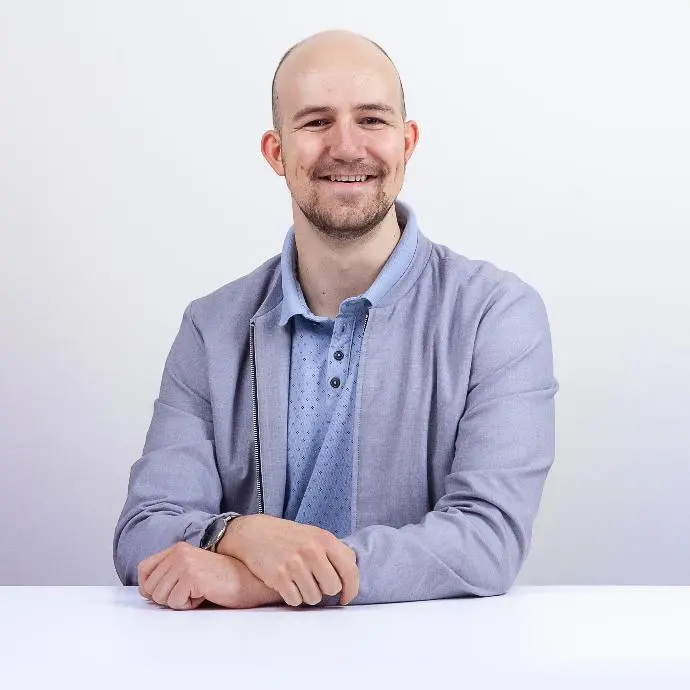
Discover our own investment
Read our story or watch it via our video.
Discover our own investment
Read our story or watch it in our video.
Ontdek onze eigen investering
Lees ons verhaal of bekijk het via onze video.
Descubra o nosso próprio investimento
Leia a nossa história ou assista ao nosso percurso em vídeo.
Do you want to invest in Brazil?
Discover how we support our clients, step by step, from the initial reflection to property management